

How to avoid the yo-yo effect after weight loss: the role of GLP-1 agonists, glucose regulation and nutritional supplements
 LIFESTYLE
  8 MIN
8 MIN  ALMAGEA
  13.03.2026
LIFESTYLE 8 MIN ALMAGEA 13.03.2026
Despite the many ways to lose weight available to us, many people find it difficult to lose extra pounds and maintain a healthy body weight. Weight loss is often not long-lasting, so weight gain and new attempts to lose weight occur. Research shows that 20% of people manage to lose weight, but only 2% manage to maintain and control their body weight. This cycle of losing and regaining weight is called the "yo-yo effect" and increases the risk of obesity and metabolic diseases. It is not yet completely clear how the yo-yo effect worsens health and metabolism during the weight regain phase, however some research shows that regardless of the type of diet, the yo-yo effect can:

GLP-1 agonists are currently considered among the most effective drugs for the treatment of obesity. They work by slowing gastric emptying, reducing appetite and regulating blood glucose levels, resulting in significant weight loss. However, their long-term effectiveness largely depends on adherence to therapy and changes in lifestyle. When users return to their old eating patterns, the pounds come back, which leads to the unwanted "yo-yo effect". Certain side effects are associated with the use of these drugs. In addition to indigestion, an unwanted side effect of muscle mass loss can occur as a result of rapid weight loss, which makes it difficult to maintain metabolism and a desirable body composition.. Therefore, in order to successfully lose weight and maintain the desired body weight, it is necessary to persevere in treatment, learn to deal with side effects, adopt healthy eating and lifestyle habits, and strive to preserve and build muscle mass during weight loss, which does not sound easy at all, but is crucial for long-term success.
The level of glucose in the blood is a key factor in the regulation of appetite, but it is not only about one simple mechanism of action, but about a complex interplay of hormones, signals in the brain, and reactions of obtaining energy. Keeping the blood glucose level stable helps in regulating satiety and hunger hormones and, ultimately, in achieving an adequate feeling of satiety. Namely, when eating food that quickly raises the level of glucose in the blood, such as refined carbohydrates and simple sugars, the body converts them into glucose with rapid reactions, which leads to a state in the body that can be divided into three phases:

When it comes to hormones, insulin, in addition to regulating blood glucose levels, works by stimulating the storage of energy in the form of fat. Chronically high insulin (hyperinsulinemia), often present in insulin resistance, tells the body to store fat and makes it difficult to use stored fat for energy. It also appears to interfere with the brain's ability to receive satiety signals from other hormones. The stomach produces the "hunger" hormone ghrelin to stimulate appetite. It is common for ghrelin levels to drop after a meal. However, research shows that a drop in blood sugar and a high insulin response can prevent a corresponding drop in ghrelin, meaning we still feel hungry even after a meal with enough calories. In addition to ghrelin, there is also the "satiety" hormone leptin, which is released by fat tissue cells. Leptin tells our brain that we have enough energy stored and that we can stop eating.Chronically high insulin levels are the primary driver of leptin resistance. It is a condition when the brain no longer "hears" the leptin signal. So poor glucose control can directly block your body's most powerful “stop eating” signal.
A strategy for better glucose control and appetite regulation includes eating foods rich in fiber, especially soluble fiber from oats, legumes, apples, and vegetables, which slow down the digestion and absorption of carbohydrates. Instead of refined carbohydrates, you should choose foods with a lower glycemic index, such as quinoa, sweet potatoes, legumes and brown rice. Food rich in carbohydrates should be taken together with food rich in protein and fat, and it is important not to overdo it. In addition, nutritional supplements also help the body control blood glucose levels.

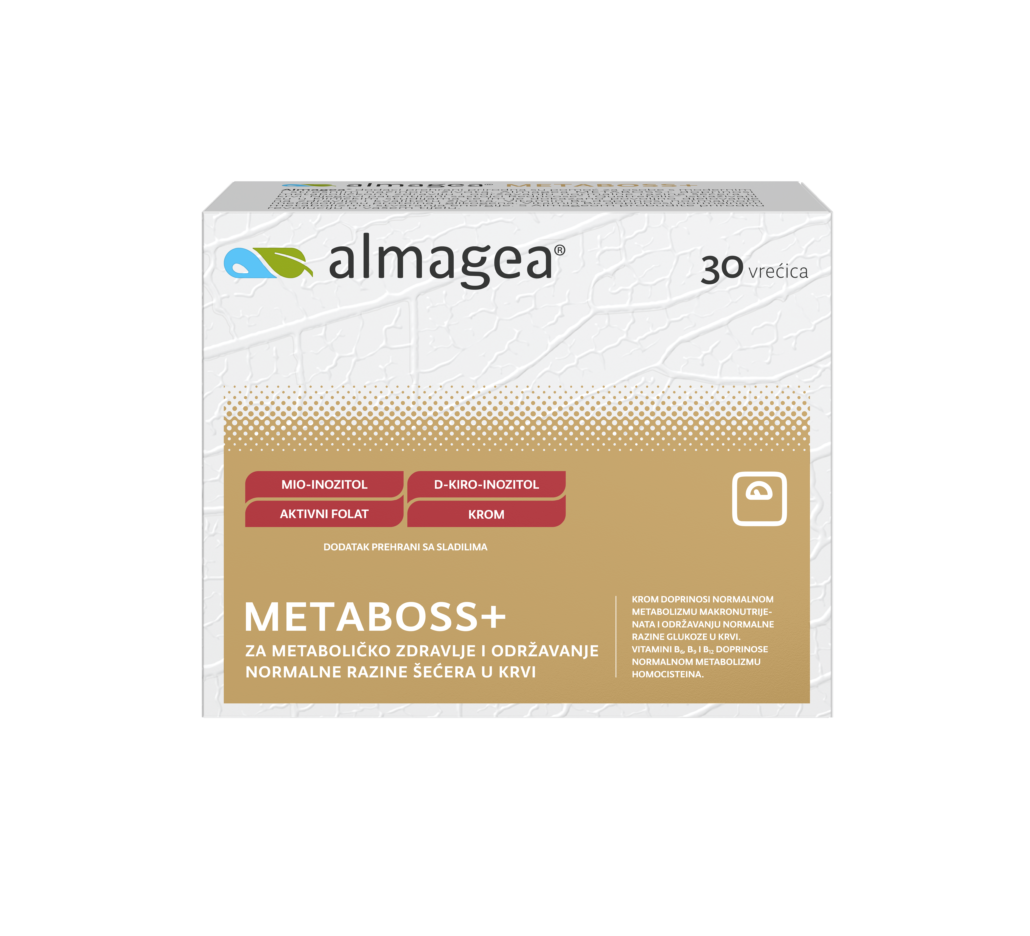
Almagea Metaboss+ is a dietary supplement that contributes to metabolic health and maintenance of normal blood sugar levels, and contains effective natural compounds - the patented ingredient Reducose™ from white mulberry leaf extract and myo- and chiro-inositol in an ideal ratio of 40:1. Metabolic processes are also facilitated by the presence of B vitamins6, B9 and B12 and active folate (Quatrefolic®) and chromium. It is important to emphasize that nutritional supplements are only a support in the process of regulating blood sugar levels, reducing glucose "peaks", achieving long-term satiety and generally during weight loss, and that a balanced diet and a healthy lifestyle are irreplaceable when talking about preventing the "yo-yo effect" and maintaining the desired body weight, whether we have achieved the desired body fat with the help of drugs or with a reduction diet and exercise. Proper nutrition, regular exercise, nutritional supplements, enough sleep and GLP-1 agonists help, but maintaining the desired body weight after therapy depends on long-term habits.
Literature:


Get to know us
Dietary supplements
Information
Let's connect
© 2024. Almagea d.o.o., Ulica Julija Knifera 4, 10 020 Zagreb
Fixed conversion rate: €1 = HRK 7.5345
buy quickly and safely