

The power of inositol: how myo- and D-chiro-inositol improve reproductive and metabolic health
 LIFESTYLE
  10 MIN
  ALMAGEA
  15.09.2025
LIFESTYLE 10 MIN ALMAGEA 15.09.2025
Inositols are substances similar to B complex vitamins that are produced and naturally occur in the human body. There are nine molecules (stereoisomers) of inositol, of which they are the most important myo-inositol and D-chiro-inositol. Inositols have attracted the attention of medical researchers, especially endocrinologists and gynecologists, only in the last twenty years, although their story goes back a long way. More specifically, inositols were discovered and isolated from muscle cells by the German physician and chemist Johannes Joseph Scherer back in 1850. The first name he gave to these cyclic molecules was "Muskelzucker" or translated from German, muscle sugar.
Inositol is an important building block of lipids, more precisely, myo-inositol is incorporated into cell membranes where it acts as a messenger in the transmission of endocrine signals, influencing the control of the production of the hormones FSH (follicle-stimulating hormone that regulates reproductive functions in men and women), TSH (pituitary hormone that stimulates the thyroid gland) and insulin. To better understand the role of myo-inositol in the body, we can imagine the cell as a factory, and the hormones FSH, TSH and insulin as directors who send important instructions, but who cannot enter the factory by themselves. In this case, myo-inositol is a messenger with a walkie-talkie that takes the message and quickly transmits it to the exact person who needs to do the task inside the factory.
In humans, a large amount of myo-inositol (approximately 1 g/day) is ingested through the diet, with cereals, legumes, seed oils and nuts being the main sources, but a significant part of the daily needs is produced by the body itself (about 4 g/day), with the kidneys being the main producers. When the production of myo-inositol is not sufficient to cover the biological needs of humans, an adequate intake of inositol through food and/or nutritional supplements is necessary. Many factors affect the daily requirements for myo-inositol, a they are increased in people who consume large amounts of caffeine, sufferers of diabetes or insulin resistance, in people who consume large amounts of carbohydrates through diet, but also in elderly people.
Myo-inositol inside cells helps move glucose transporters to the cell surface. Glucose transporter is a protein that facilitates the transfer of glucose through the cell membrane, that is, promotes the entry of glucose into the cells. Tissues that consume a lot of glucose, such as the brain, heart, and ovary, contain more myo-inositol than other tissues.
Under the influence of insulin, certain enzymes convert myo-inositol into D-chiro-inositol, as needed, to ensure the proper functioning of the metabolism. The role of D-chiro-inositol in the body is to stimulate the formation of glycogen, the form that "stores" glucose, so it is especially important in the liver and muscles. D-chiro-inositol enhances the action of key molecules that transmit the insulin signal in cells. More specifically, D-chiro-inositol improves the action of insulin by coordinating the action of proteins: while it activates one, it reduces the action of others. Thanks to this, D-chiro-inositol reduces the amount of free glucose inside the cells, creating a difference in glucose concentration that further promotes the entry of glucose from the blood. In addition, it stimulates the work of enzymes (pyruvate dehydrogenase), which accelerates the processes of glucose breakdown and energy production. Overall, myo- and D-chiro-inositol together improve the body's sensitivity to insulin, meaning the body needs less insulin to regulate blood sugar levels.
If myo-inositol is a messenger with a walkie-talkie that transmits hormone messages within the factory, then D-chiro-inositol is like a storekeeper and coordinator within the factory that receives the message and immediately decides where to store excess sugar and which machines to start to produce energy in an efficient manner. As a storekeeper, it stores glucose in stores, the liver and muscles, and as a protein coordinator, it signals some to work at full strength, while calming others down so that insulin can be better used. When insulin "knocks on the door" it decides whether the sugar will be used for storage or for energy.

Inositols, especially myo-inositol, are important not only for glucose metabolism, but also for the functioning of the female and male reproductive systems. In women, myo-inositol helps the action of the hormone FSH, which is crucial for the maturation of the ovum and the development of the cells that surround it. It also helps in the production of anti-Müllerian hormone (AMH), which is important for fertility and affects the quality of the egg and embryo. Inositols appear to be particularly beneficial for women with PCOS because they affect several aspects of reproductive function, including menstrual cycle regularity, ovulation, fertility and insulin resistance, which can be one of the reasons for reduced fertility in women.
In men, the concentration of myo-inositol in the sexual organs is higher than in the blood, which shows that it also plays an important role in male fertility. It helps in sperm motility, their preparation for fertilization and penetration into the ovum. That is why it is often used as a support in the treatment of male infertility, especially in conditions with poor sperm quality.
Clinical studies have shown that inositols have a good safety profile. In the studies, the tested doses ranged between 2 and 18 grams per day, with the fact that mild side effects such as stomach problems were only recorded at higher doses. Dietary supplements with inositol have also been tested in pregnant women and no worrisome effects have been reported.

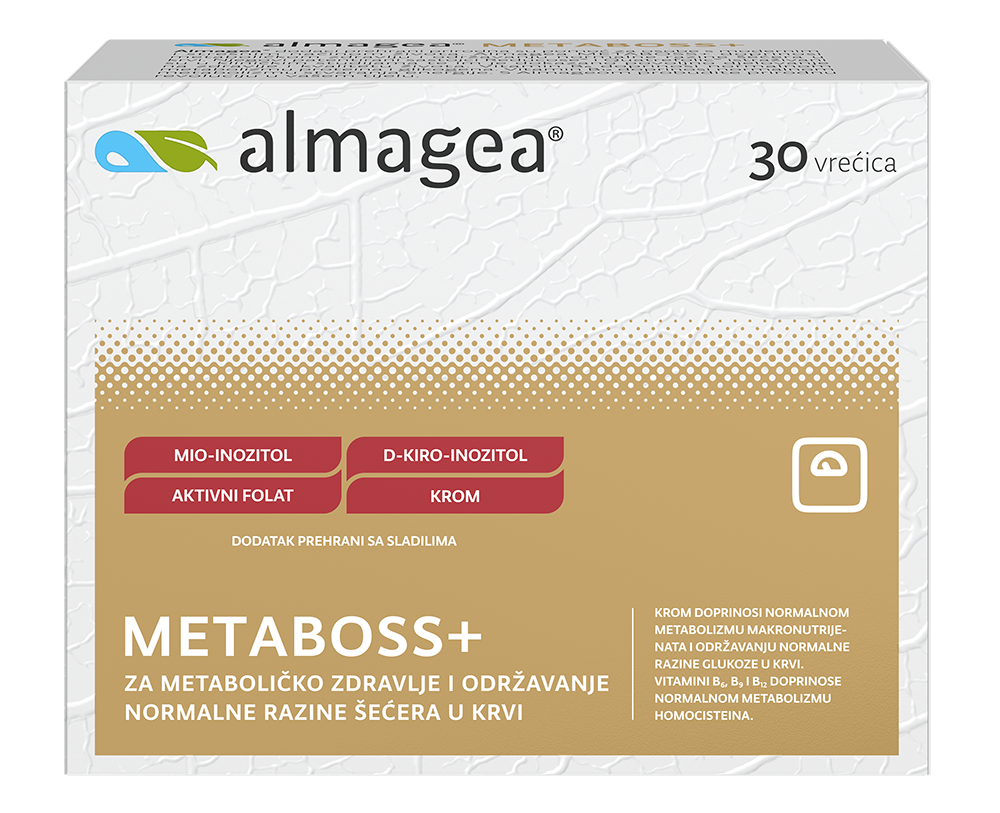
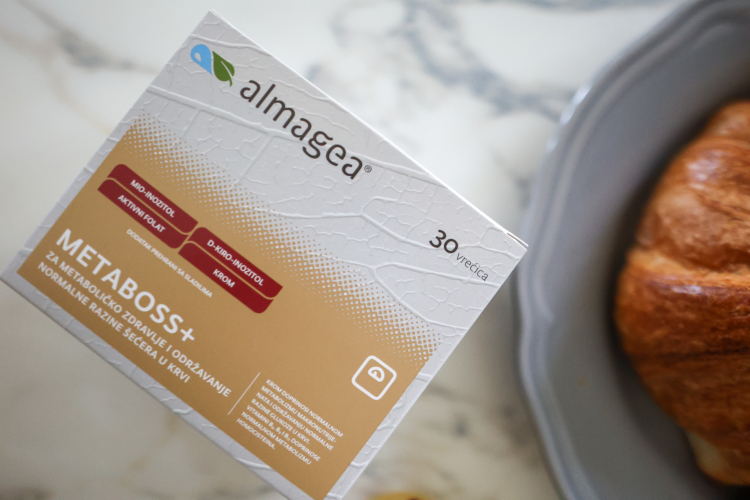
Studies conducted with the combination of myo- and D-chiro-inositol in a ratio of 40:1 showed better results than the use of only myo-inositol or D-chiro-inositol. Since D-chiro-inositol and myo-inositol probably act through different biological mechanisms, both forms of inositol can be synergistically combined in a multi-target approach, in a ratio that corresponds to their natural physiological proportion in the blood (40:1). Almagea® Metaboss+ is a dietary supplement intended for maintaining normal blood sugar levels and metabolic health, and contains myo- and D-chiro-inositol in the recommended ratio of 40:1. In addition to inositol, Almagea Metaboss+ it also contains patented ingredients, white mulberry extract (Reducose®) and active folate (Quatrefolic®), which have been investigated in numerous clinical studies and have been proven to have beneficial effects on health. With a combination of B vitamins6, B9 and B12 and chrome, Almagea Metaboss+ is a dietary supplement that facilitates the care of metabolic health and the maintenance of desirable blood glucose and insulin values for better general health and longevity.


Get to know us
Dietary supplements
Information
Let's connect
© 2024. Almagea d.o.o., Ulica Julija Knifera 4, 10 020 Zagreb
Fixed conversion rate: €1 = HRK 7.5345
buy quickly and safely