

L-tyrosine: the key link between the thyroid and stress
 LIFESTYLE
  8 MIN
8 MIN  ALMAGEA
  09.02.2026
LIFESTYLE 8 MIN ALMAGEA 09.02.2026
When we are stressed, our body consumes more nutrients than usual. Among them, L-tyrosine stands out, an amino acid that helps the thyroid gland and the mind to stay in balance. Did you know that L-tyrosine is a key building block of thyroid hormones? In combination with iodine, the thyroid gland uses it to synthesize thyroxine (T4), a hormone that contains four iodine atoms attached to a tyrosine molecule. It then produces triiodothyronine (T3), a more active form of the hormone that is produced by a special biosynthetic process within the gland itself. When there is not enough tyrosine in the body, the thyroid gland cannot produce optimal amounts of these hormones, which can lead to slowed down work of the gland, that is hypothyroidism.
It is known that both acute and chronic stress can negatively affect thyroid function. Thyroid hormones participate in the regulation of metabolism and the body's sensitivity to cortisol, the main stress hormone. When thyroid hormone levels drop, the hypothalamus-pituitary-adrenal axis (HPA axis), which controls cortisol secretion, can be disrupted. This is why thyroid health and stress levels are inextricably linked, any imbalance in one system affects the other.
In today's age, there are few people who do not somehow come into contact with stress, at work, at home or in an attempt to balance both. Almost two-thirds of Croats, or 60%, feel a medium level of stress, and even 30% feel a high level of stress. In general, we say that today stress is a growing public health problem that has a negative impact on the quality of life, and is associated with diseases of the heart and blood vessels, malignant diseases, digestive disorders and diseases, and obesity. Continuous exposure to stressful situations significantly weakens the immune system and makes us susceptible to various infections and diseases. This is precisely why it is important to know how to control the appearance of stress and reduce its negative consequences that arise on a physiological and emotional level, and are manifested by feelings of anger, fear, depression, anxiety, sleepiness or insomnia.

When we are exposed to stress, numerous chemicals are secreted in the body, including stress hormones, adrenaline and cortisol, which stimulate the increased work of the immune system in order to defend against disease. However, when the stressful period passes, the secretion of stress hormones is significantly reduced, which is a sign to the immune system that the danger has passed and it relaxes, making us less resistant to diseases. At the same time, remaining prostaglandins, substances released in response to stress, can cause inflammatory processes in the body. Therefore, the period after intense stress is "critical" for the manifestation of certain minor, but also more serious health problems.
Nutrition and nutritional supplements are powerful factors that can facilitate or prevent the manifestation of stress symptoms in the body. A properly balanced and regular diet in itself provides significant protection for people exposed to stressful situations. In these periods, the organism is exhausted more intensively than usual due to increased cellular activity, and at the same time there is an increased need for nutrients. Proteins and certain amino acids, antioxidants, group B vitamins, essential fatty acids, iron, selenium, calcium and magnesium are of special importance for the homeostasis of the organism, and selected medicinal plants with adaptogenic effects provide additional benefits. Particularly interesting is the role of tyrosine, which has been intriguing for years, and recently, interventional studies indicate benefit of tyrosine supplementation on cognitive functions during stressful periods.
Chronically elevated cortisol increases catabolism (protein breakdown) and stimulates the production of catecholamines through the sympathetic system, which increases the metabolic need for tyrosine. The increased need for proteins is partly conditioned by the increased work of the adrenal gland, so during stress hormones, which regulate the conversion of proteins into carbohydrates, are secreted at a higher intensity than usual, which leads to an accelerated breakdown of proteins. A diet low in protein can also result in a weakening of the immune system and its ability to resist various infections.
In periods of stress, the body's needs for certain nutrients increase, and among them especially for the amino acid tyrosine. In such circumstances, she is considered conditionally essential, which means that the body cannot always produce enough of it on its own, but sometimes it needs to be additionally ingested with food or nutritional supplements. Tyrosine is crucial because it is the precursor, i.e. the starting material, for the creation of important brain chemicals: catecholamines, dopamine, noradrenaline and adrenaline. These neurotransmitters play a crucial role in the functioning of the brain and the response to stress.
This is why a sufficient intake of L-tyrosine can help the brain function better under pressure, supporting focus, mental clarity and resistance to stress.

Tyrosine is a direct precursor of dopamine. Dopamine can then be converted into noradrenaline and adrenaline. Supplementation with tyrosine can increase the availability of dopamine, especially in stressful situations or with mental exhaustion. Additional use of L-tyrosine can help preserve working memory, control stress and mood. Changes in the availability of L-tyrosine for the brain, such as occur in a state of stress, can affect the synthesis of dopamine and noradrenaline. Therefore, it is logical that the most important effect of L-tyrosine is the mitigation of cognitive impairment and the so-called "foggy brain", created under the influence of acute stress.
In a study published in 2015, scientists analyzed 10 randomized controlled studies and 4 controlled clinical studies on the use of L-tyrosine. The results showed that there is not enough evidence that tyrosine improves physical performance under stressful conditions, but all studies showed a positive effect on mental (cognitive) functions under stress, which is why the authors gave a mild recommendation in favor of the use of tyrosine in mental stress.
Stress and thyroid hormones are closely related; long-term stress can disrupt hormone balance and weaken thyroid function, while reduced thyroid activity further increases sensitivity to stress and fatigue. That is why, along with a balanced diet and a healthy lifestyle, targeted nutritional support can be of great benefit.
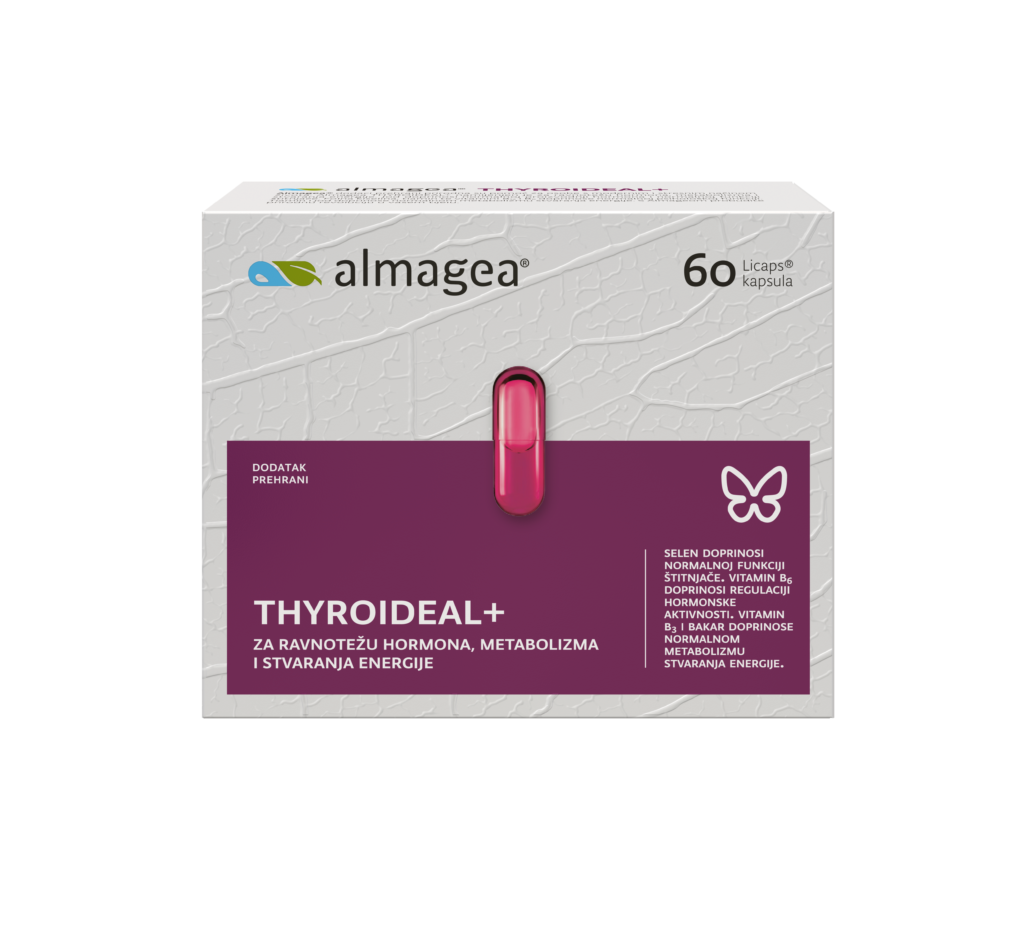
Almagea Thyroideal+ is a formulation specially designed for optimal support of thyroid function and better resistance of the organism to stress. Contains carefully selected nutrients that work synergistically:
This combination does Almagea Thyroideal+ učinkovitim saveznikom zdrave štitnjače, stabilne energije i bolje prilagodbe na svakodnevne izazove.
Literature:


Get to know us
Dietary supplements
Information
Let's connect
© 2024. Almagea d.o.o., Ulica Julija Knifera 4, 10 020 Zagreb
Fixed conversion rate: €1 = HRK 7.5345
buy quickly and safely